Advancing Disability-Inclusive Climate Governance in Uganda
We are proud to announce the implementation of a transformative initiative supported by the Youth Climate Justice Fund aimed at strengthening disability-inclusive climate governance in Uganda.
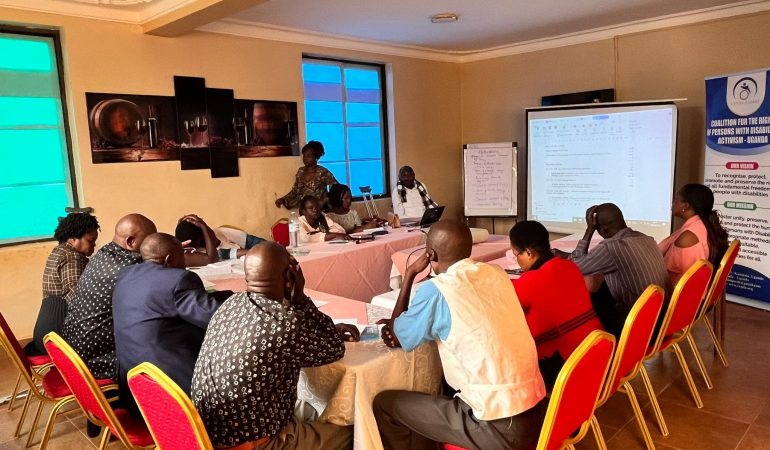
Our project seeks to advocate for effective climate governance strategies that encompass institutional frameworks, laws, policies, norms, programs, decision-making processes, stakeholder interactions, and thematic priorities established by Organizations of Persons with Disabilities (OPDs) and lower local government structures. Through this initiative, we aim to ensure that climate action at all levels effectively addresses the unique challenges faced by persons with disabilities and promotes their meaningful participation in shaping climate solutions.
Climate change is one of the greatest challenges of our time, but its impacts are not felt equally. The world’s poorest and most vulnerable populations bear the heaviest burden, and among them are millions of persons with disabilities who often experience a double disadvantage. While climate change threatens access to food, water, shelter, livelihoods, health services, and security for many communities, persons with disabilities face additional barriers that significantly increase their vulnerability.
Studies have shown that persons with disabilities can face mortality rates up to four times higher than those without disabilities during natural disasters. Yet despite representing a significant proportion of the population, their needs, perspectives, and capacities are frequently overlooked in climate adaptation, disaster risk reduction, and emergency response efforts.
In Uganda, the effects of climate change are becoming increasingly visible through prolonged droughts, devastating floods, landslides, extreme heatwaves, unpredictable rainfall patterns, and environmental degradation. For many persons with disabilities, these climate-related events create life-threatening challenges.
Imagine a wheelchair user attempting to evacuate during severe flooding when roads become impassable and emergency shelters are inaccessible. Consider a blind person navigating a rapidly changing disaster environment without accessible warning systems. Think of a deaf person unable to receive critical emergency information because alerts are not provided in sign language or accessible formats. Reflect on the experiences of persons with albinism who face heightened risks during extreme heatwaves due to increased sensitivity to sunlight and limited access to protective resources.
Beyond emergency situations, climate change disrupts access to healthcare, education, transportation, social protection services, employment opportunities, and community support systems. Many persons with disabilities rely on assistive devices, medications, caregivers, and accessible infrastructure, all of which can become unavailable or inaccessible during climate-related crises.
These realities demonstrate why disability inclusion cannot be treated as an afterthought in climate action. Persons with disabilities are not merely victims of climate change; they are leaders, innovators, community members, and agents of change whose knowledge and experiences can strengthen climate resilience for everyone.
Through this project, we will work closely with Organizations of Persons with Disabilities, local government authorities, youth leaders, community stakeholders, and development partners to advocate for climate governance systems that are inclusive, responsive, and accountable. We seek to strengthen the participation of persons with disabilities in climate decision-making processes, promote accessible disaster preparedness and response mechanisms, support inclusive climate policies and programs, and ensure that disability considerations are integrated across climate governance structures at all levels.
Our vision is a Uganda where climate policies, adaptation strategies, disaster risk reduction plans, and resilience-building initiatives leave no one behind. We believe that meaningful climate justice can only be achieved when the voices, experiences, strengths, and vulnerabilities of persons with disabilities are fully recognized and reflected in every climate forum, policy framework, strategy, response mechanism, and development agenda.
As we embark on this journey, we call upon government institutions, civil society organizations, development partners, community leaders, and citizens to champion disability-inclusive climate action. Together, we can build resilient communities, strengthen climate governance, and ensure that persons with disabilities are empowered to participate fully in shaping a sustainable and climate-resilient future.
Because climate justice is only possible when it is inclusive, accessible, and equitable for all.